Ranking instability
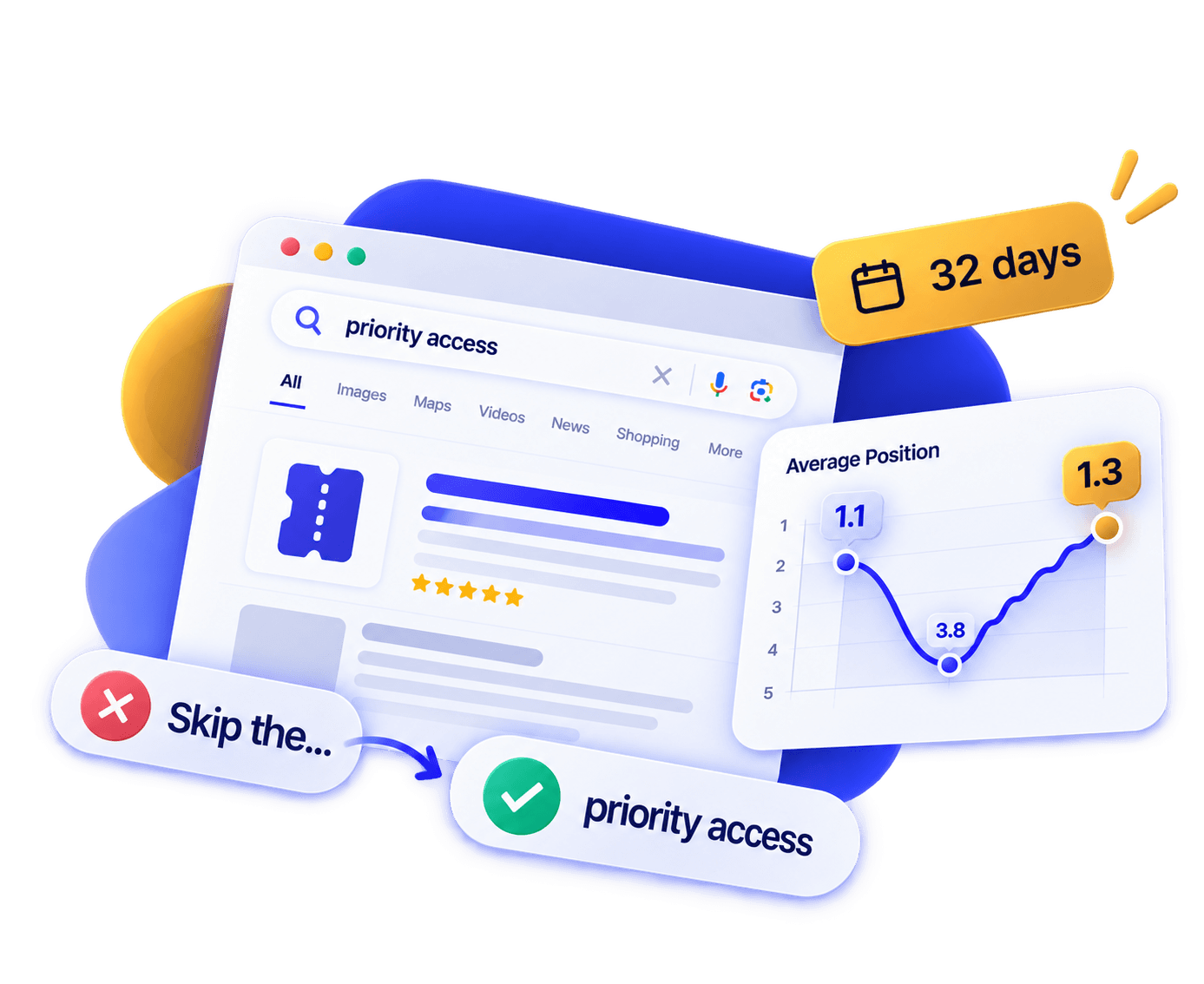
Even after the initial technical fixes the page fluctuated beyond Page 2, so early signs of progress were not yet a position.
Demand was never the problem. Visibility was.
A share of the mix, not an amount. No figures published.
The topical authority work, paying separately.
The three shares describe the current organic mix.
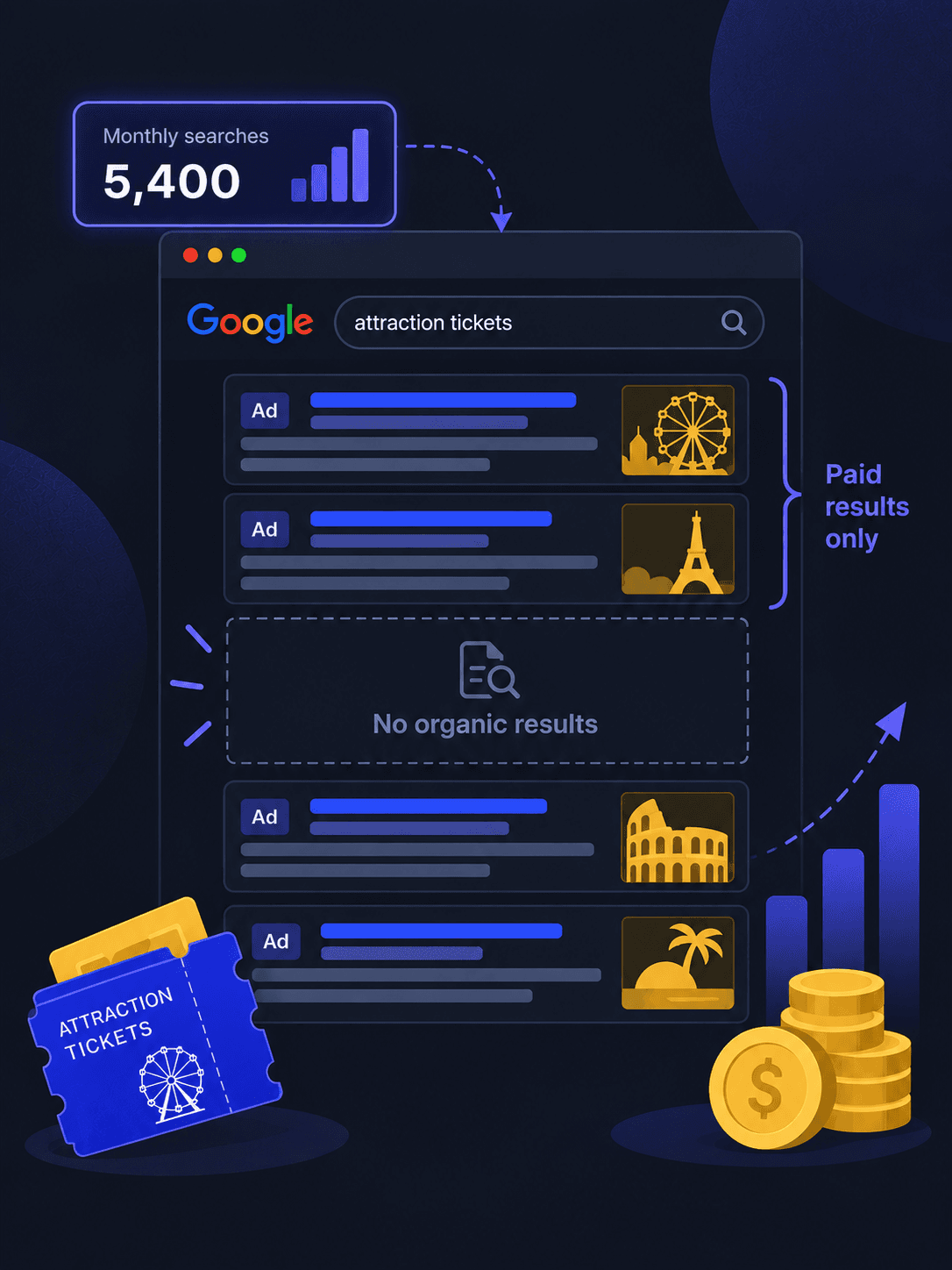
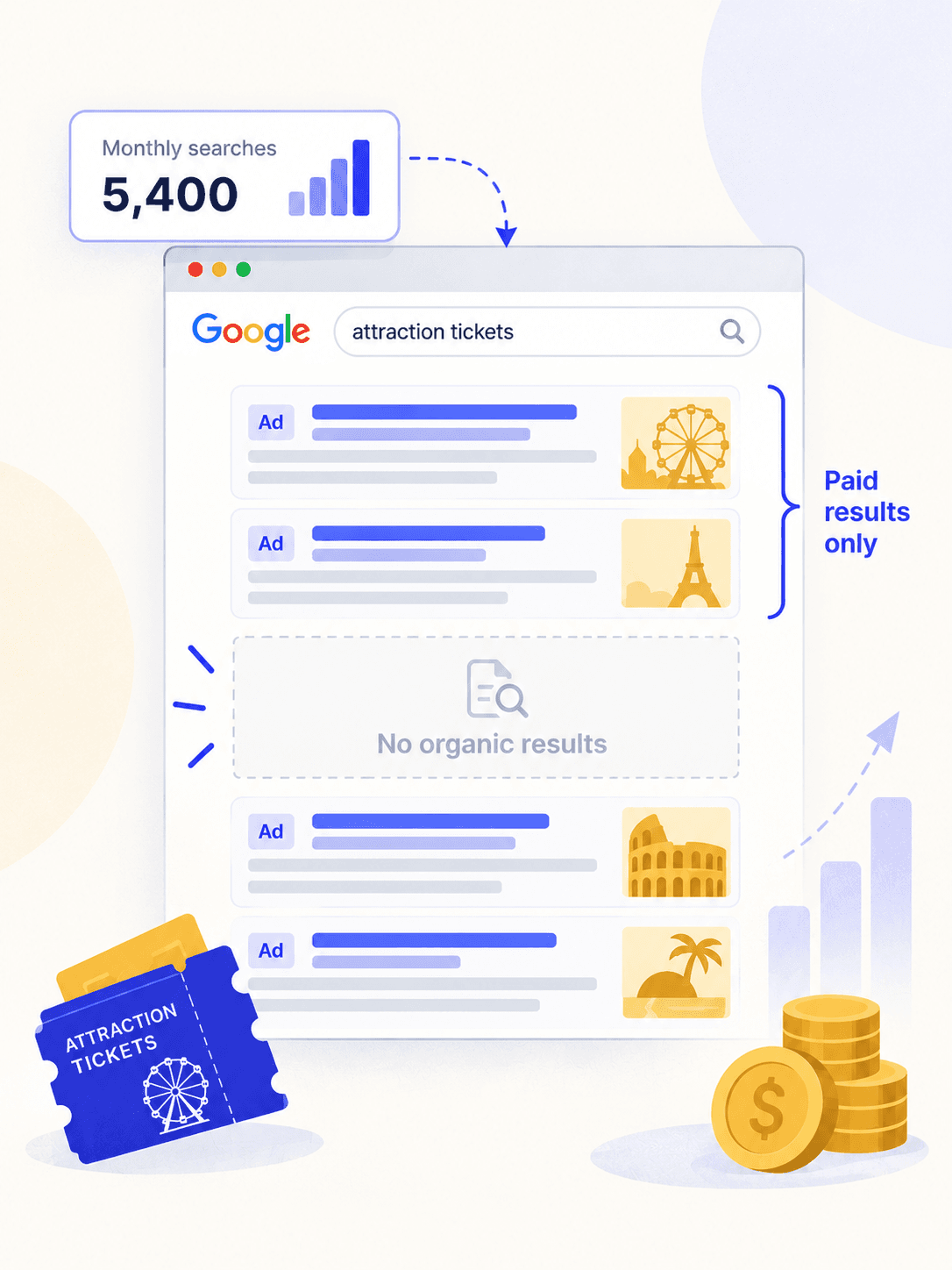
A tickets landing page targeting a transactional keyword had strong demand, 5,400 monthly searches a month, and was not generating any organic revenue at all. Paid marketing carried the page entirely.
That is an expensive way to run a page that should be earning its own traffic. Paid acquisition puts a ceiling on what a page can make, because the cost of the next visitor never falls.
The page wasn’t ranking for its primary transactional keyword. Google Search Console showed a “dotted” ranking, which indicates an indexing problem rather than a competitive one. With no organic visibility, the page depended entirely on paid acquisition, capping its profitability.
Each phase only made sense once the one before it had landed: indexability first, then authority, then the on-page work that needed both to matter.
Confirmed consistent 200 status codes so nothing was interrupting indexability, and rebuilt internal linking so the page could actually be reached and understood from the rest of the site.
Built shoulder pages around the subject to establish topical authority, and acquired high-value backlinks so the domain had something to stand on for this query rather than borrowing credibility from elsewhere.
Reworked metadata, headings and structured data, and refined the copy so it matched the intent behind the query rather than the wording of it.
Even after the initial technical fixes the page fluctuated beyond Page 2, so early signs of progress were not yet a position.
Competing against established, high-authority pages needed real backlink and topical depth, not just technical cleanup.
Reaching Page 1 took sustained work across multiple phases rather than one fix, with months between visible movements.
Five dates, five months. Each one is when a phase landed, and the fluctuation between them is left in rather than smoothed out.
Page not ranking, showing a dotted rank in Search Console. The technical SEO audit begins.
Post-fix, the page achieves a rank but fluctuates beyond Page 2. Content and marketing intervention begins.
Steady growth: the page reaches the top of Page 2. The final SEO audit and on-page optimisation begins.
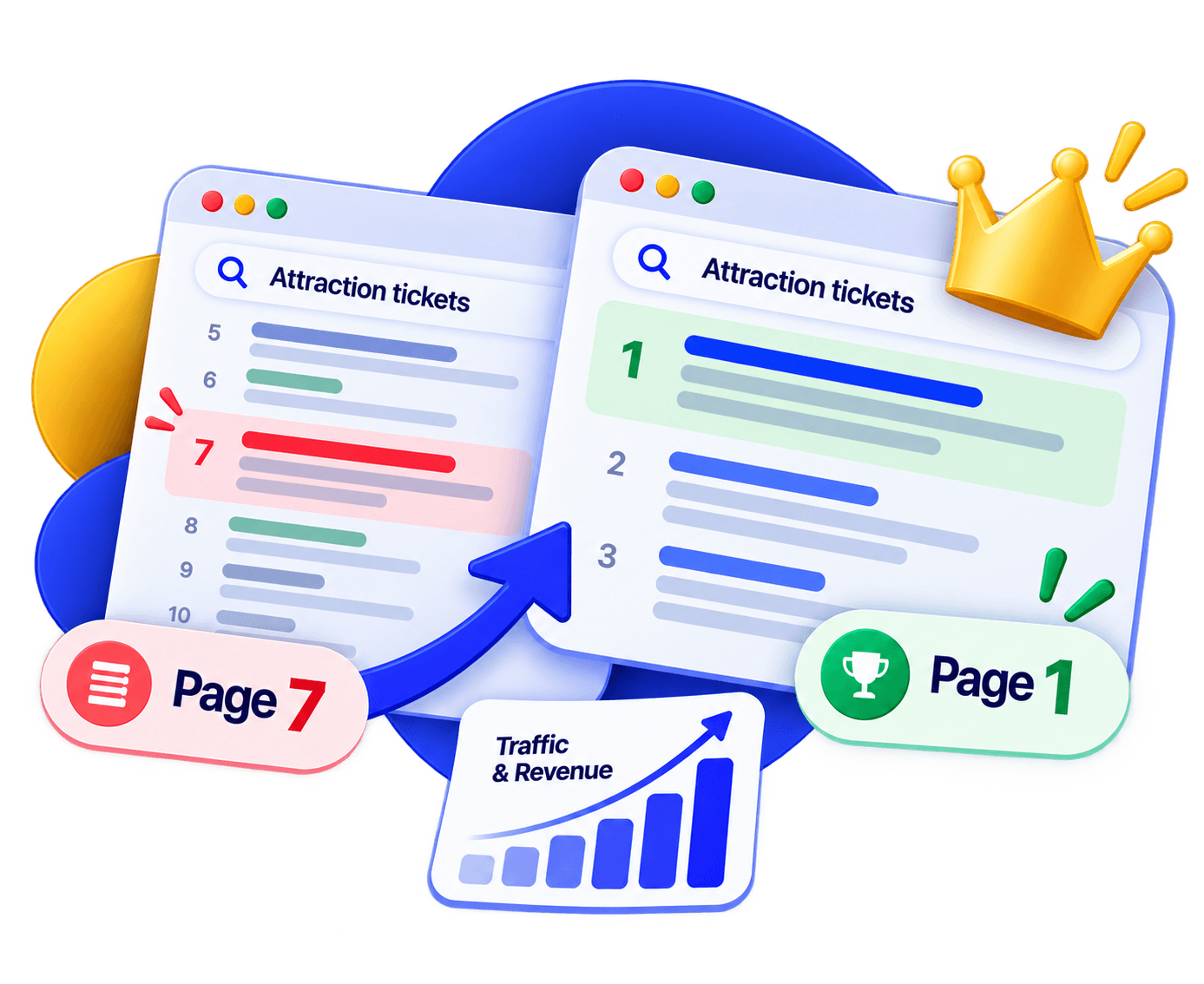
The page reaches Page 1. Sharp spike in impressions and bottom-funnel traffic.
Organic revenue now splits 73.4% from the landing page, 21% from shoulder pages and 6% from other channels.
Dotted
No organic ranking · 4 Nov 2023
Page 1
Reached · 22 Apr 2024
Search Console showed a dotted rank rather than a position, and paid acquisition carried the page on its own.
A sharp spike in impressions and bottom-funnel traffic, and a revenue mix that is now majority organic.
The honest starting point is zero: the page had no organic ranking at all, so this is a channel built from nothing rather than a position defended. The change is described as a mix (73.4% landing page, 21% shoulder pages, 6% other) because the amounts behind it are not published.
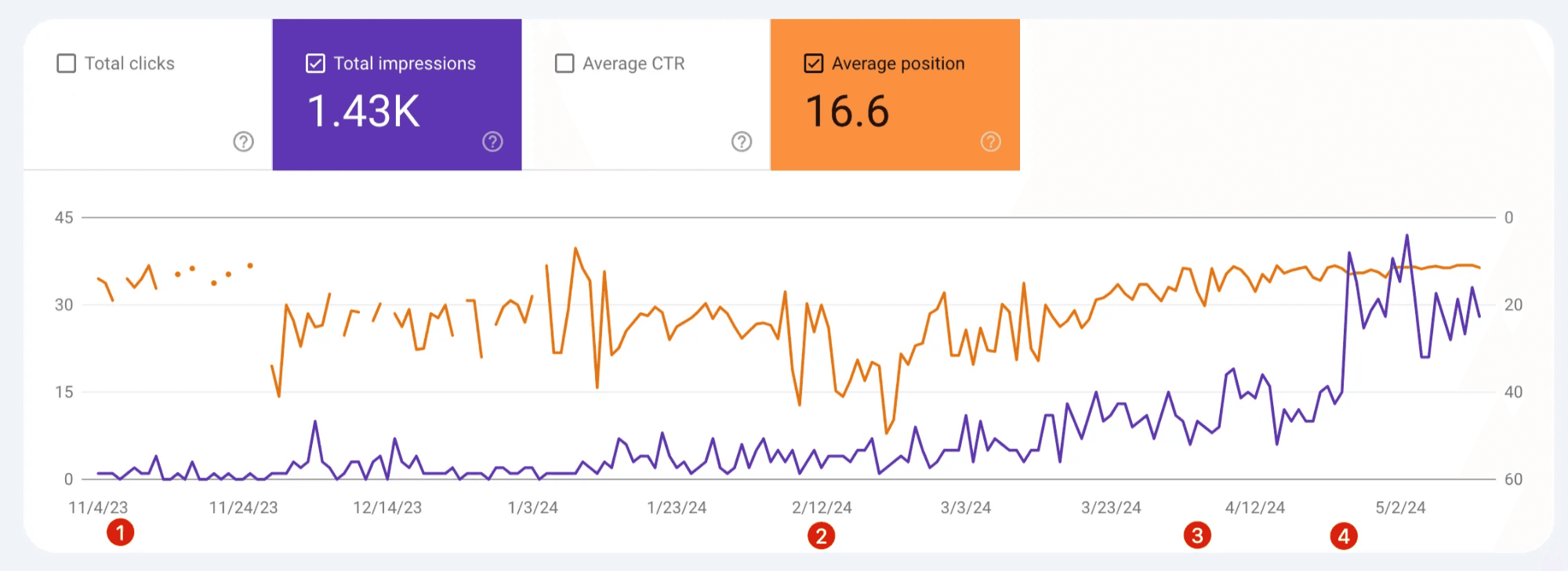
The technical fixes were what made the page eligible; the shoulder pages and backlinks were what made it credible; the on-page work was what made it match the intent. Doing any of those alone would have stalled, which is roughly what the fluctuation beyond Page 2 was telling us at the two-month mark.
This page had no organic ranking at all before the work began. If you are building a channel from nothing, that is familiar ground.